Early diagnosis of sickle cell disease offers newborns a better future
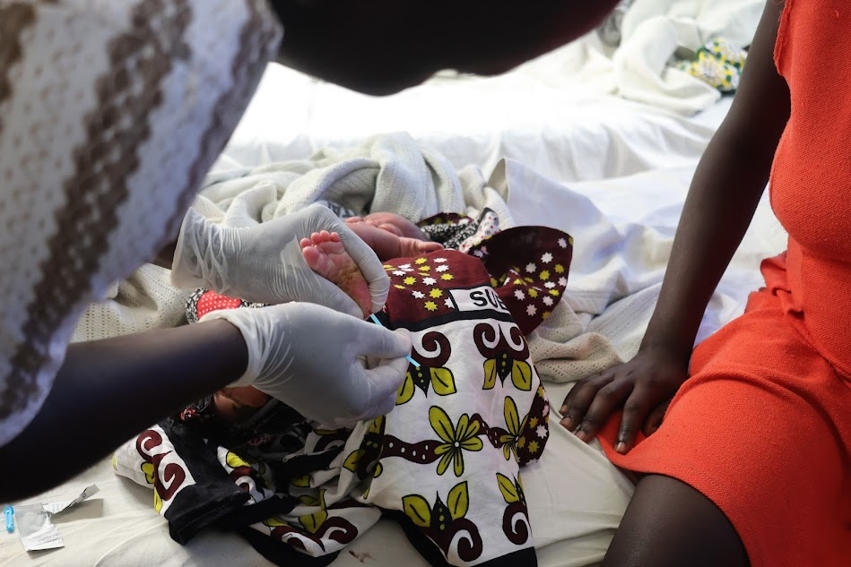
In Kakamega County in western Kenya, a new project for the early detection of sickle cell disease in newborns has got off to a successful start. In the first few months alone, just under 2,500 newborns were tested and the first affected children were quickly referred for medical care.
Sickle cell disease (SCD) is one of the most common hereditary blood disorders worldwide and poses a major challenge to child health, particularly in many countries in sub-Saharan Africa. Without timely diagnosis and treatment, serious complications can arise, which often become life-threatening as early as infancy.
To prevent this, SolidarMed, together with its partner organisations DAMKA, the Masinde Muliro University of Science and Technology (MMUST) and the Kakamega County Health Department, is implementing a two-year project for the early detection of the disease.
In collaboration with the ”la Caixa” Foundation's Child Survival programme, screening is being gradually integrated into existing mother-and-child health services.
Key foundations laid
Since the project began, the key prerequisites for introducing the screening have been established. These include the development and validation of training materials, obtaining all necessary ethical and regulatory approvals, and setting up a digital system for data collection and tracking.
In addition, suitable health facilities have been selected, medical equipment and consumables have been procured, and information and awareness-raising materials have been developed and distributed.
Healthcare professionals trained
There is a particular focus on capacity building. By mid-2026, 420 healthcare professionals across 21 healthcare facilities had already been trained. The training covers how to carry out screening using point-of-care rapid diagnostic tests, interpret the results, and identify which samples need to be referred for confirmatory testing. Participants also learn how to advise families and refer affected children to appropriate care services.
Initial screenings are proving effective
The initial results are encouraging: by the end of July 2026, 4000 newborns had already been screened.

Of the children tested:
- 3495 had normal results (AA),
- 500 had the sickle cell trait (AS),
- and 5 children were diagnosed with sickle cell disease (SS).
Particularly important: all affected children were identified at an early stage and successfully referred to specialised care services. It is precisely this early access to treatment that can play a decisive role in preventing severe disease progression and avoidable deaths.
Beyond identifying children with sickle cell disease, the screening also detected 432 children with sickle cell trait. While they do not have the disease themselves, knowing their carrier status can provide families with important information for future health and family planning decisions.
The foundation for sustainable change
In addition to its immediate impact on children and families, the project contributes to the long-term strengthening of the health system. For the first time, the data collected provides important insights into the prevalence of sickle cell disease in the region and can support future decisions regarding planning and resource allocation.
At the same time, the project is working closely with local authorities to integrate screening permanently into regular mother-and-child health services. Strong support from the Kakamega County Health Department creates favourable conditions for this.
Looking ahead
In the coming months, further healthcare facilities will be trained and integrated into the programme. At the same time, mentoring, data quality and the follow-up of children who have tested positive will be further strengthened.
The shared goal remains clear: to reach more newborns at an early stage, provide timely care for affected children and give them the chance of a healthy life.
This project is being implemented by SolidarMed through DAMKA, MMUST and the Kakamega County Health Department, in collaboration with ”la Caixa” Foundation.